Death
1745
A Satirist’s Remains Become Objects Of Examination
Dublin, Ireland/Traditional date: Death date recorded in the Irish Julian calendar.
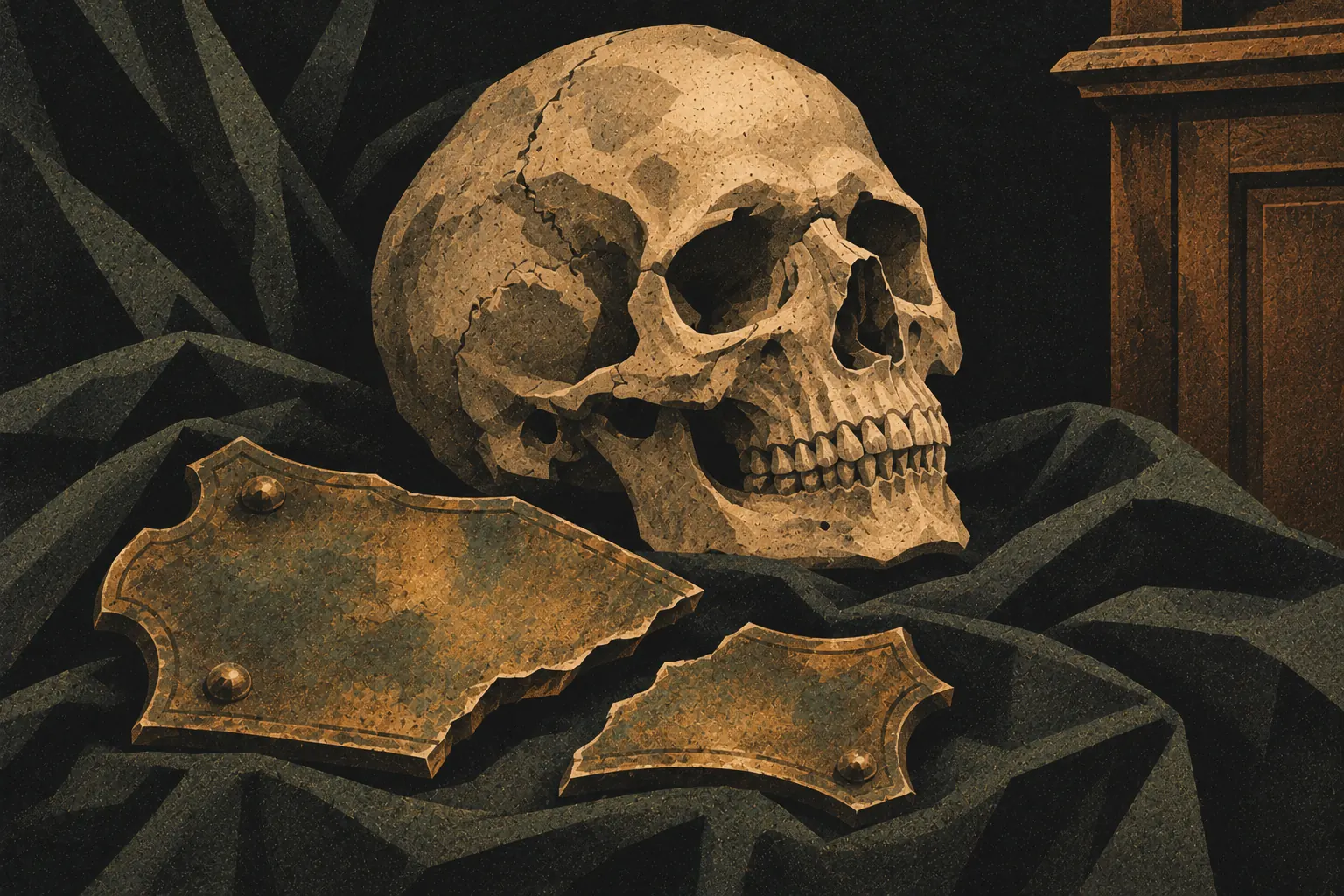
Jonathan Swift died in Dublin, but his remains were not left in peace. Ninety years later they were dug up and examined by the physician William Wilde, Oscar Wilde’s father. Saint Patrick’s Cathedral still keeps death masks and a cast of Swift’s skull alongside the satirist’s own fierce epitaph.
Eccentric
1784
A Prisoner Papers His Cell With Roses
Southgate, Middlesex
Leigh Hunt was born at Southgate. Jailed for attacking the Prince Regent in print, he papered his cell with roses and painted the ceiling as a sky full of clouds. Books, busts and a piano followed, and visitors found a poet’s bower inside the gaol, a luxury no ordinary prisoner could dream of.
Folklore
735
A Pursuing Prince Loses His Sight
Oxford, England/Traditional date: Traditional feast; the death year follows the museum’s account and is not secure.
Frideswide’s feast honours Oxford’s patron saint, who fled an unwanted marriage. The prince who pursued her, so medieval writers told it, was struck blind at the town gates and regained his sight only after reconciliation and prayer. The tale, set down centuries after her lifetime, also links her to a healing well at nearby Binsey.
Fig. IVInvention
1862
Potato Starch Helps Photograph The World In Colour
Besançon, France
Auguste Lumière was born at Besançon. With his brother Louis he later created the Autochrome, a way of photographing the world in colour that used microscopic grains of dyed potato starch as filters. Light passed through this mosaic of humble vegetable particles and came out the other side as a glowing colour picture.