Fig. IScience
1844
A chemist leaves his eyes to an experiment
Manchester, England
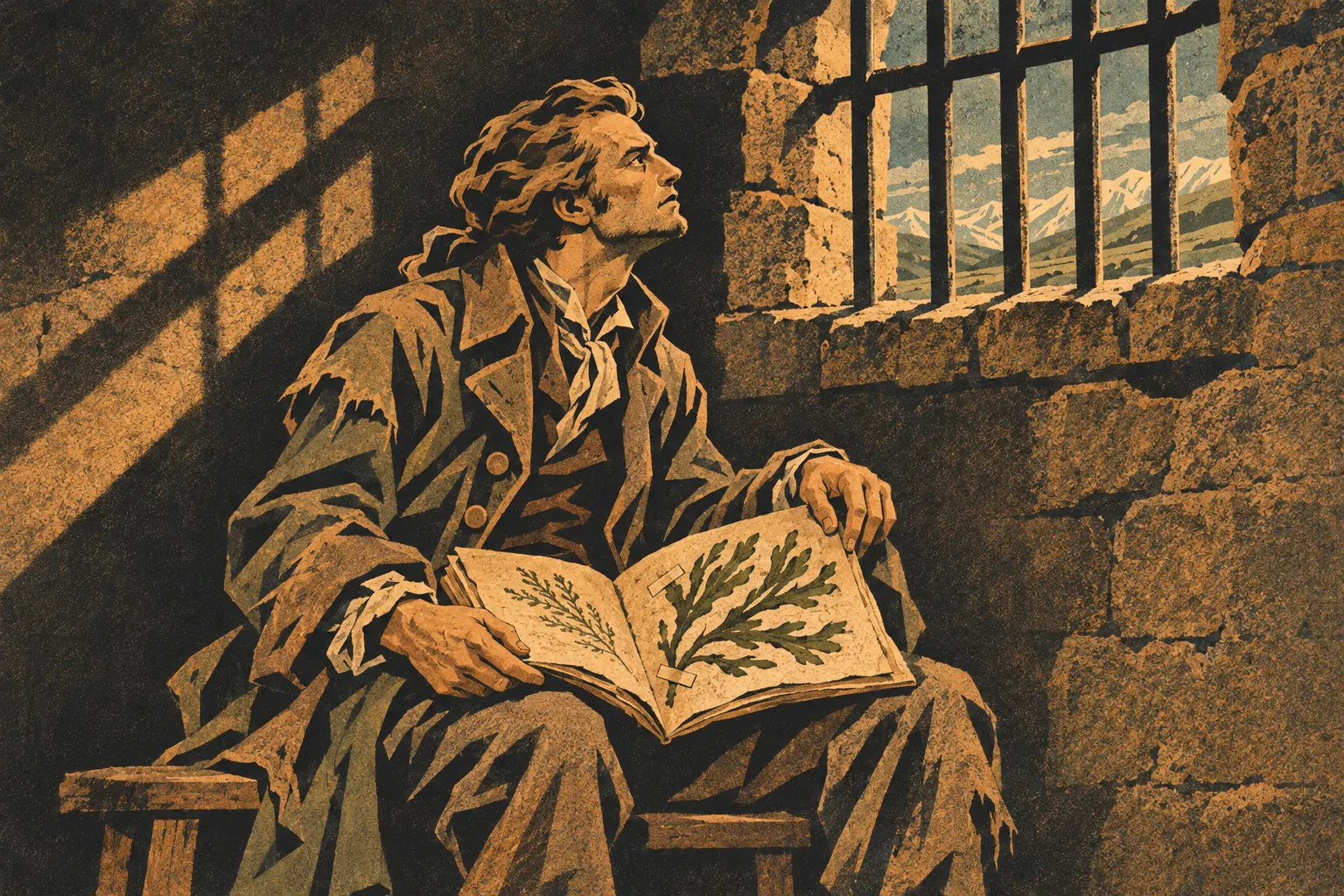
John Dalton died in Manchester, having asked for his eyes to be examined after death. He suspected that blue-tinted fluid caused his colour blindness, but the next day's examination found it clear. Long afterwards, DNA from the preserved tissue identified the true culprit, a missing green-sensitive pigment, answering a question its owner had framed wrongly.
Eccentric
1656
A philosopher is cursed by day and night
Amsterdam, Netherlands
Amsterdam's Portuguese-Jewish congregation pronounced its ban against Baruch Spinoza. The proclamation called down biblical curses upon him and forbade ordinary contact with him. Its ferocity survives in the text, though exactly what the philosopher had done to provoke it is far less clear, and his later writings only partly explain the quarrel.
Eccentric
1946
A writer’s final question changes in the telling
Neuilly-sur-Seine, France
Gertrude Stein died near Paris. Her last exchange with Alice B. Toklas has come down as a riddle about questions and answers, but Toklas told it in more than one version, and biographers have favoured the most memorable. The celebrated farewell shows how literary legend can polish a half-remembered moment until it gleams.
Folklore
250
Seven sleepers wake into a different century
Ephesus, Asia Minor/Traditional date: Former western feast on 27 July; 250 is the conventional setting of the legend, and other calendars use different dates.
The old western feast of the Seven Sleepers recalls Christians sealed inside a cave during persecution. Instead of dying, the legend says, they slept for centuries, and woke to a world transformed, where their ancient coins aroused suspicion. The tale travelled far beyond Christianity, carrying its cavern and its miraculous sleep into other faiths.